- By the Travel Free Cusco Team
- Updated November 2026
- 8 min read
The Machu Picchu train is the most popular way to reach the town of Aguas Calientes, at the foot of the citadel. In fact, there is no road from Cusco, so almost every visitor rides the rails at least one way. Moreover, the journey itself is beautiful, following the Urubamba River through a deep green canyon. In this guide, our local team compares the operators, the classes, and the best way to book.
- Two companies run the route: PeruRail and Inca Rail.
- Most trains leave from Ollantaytambo, about 1.5 to 2 hours from Aguas Calientes.
- Some trains leave from stations near Cusco, which adds travel time.
- Each company offers several classes, from standard panoramic cars to luxury service.
- Luggage is limited to a small bag of about 5 kg per person.
- 1. How the Machu Picchu Train Works
- 2. PeruRail vs Inca Rail
- 3. Machu Picchu Train Classes Compared
- 4. Where the Machu Picchu Train Departs
- 5. Booking Your Machu Picchu Train Tickets
- 6. Luggage Rules on Board
- 7. Tips for Your Machu Picchu Train Ride
- 8. Tours That Include the Train
- 9. Machu Picchu Train: Frequently Asked Questions
- 10. Final Thoughts on the Machu Picchu Train
1. How the Machu Picchu Train Works
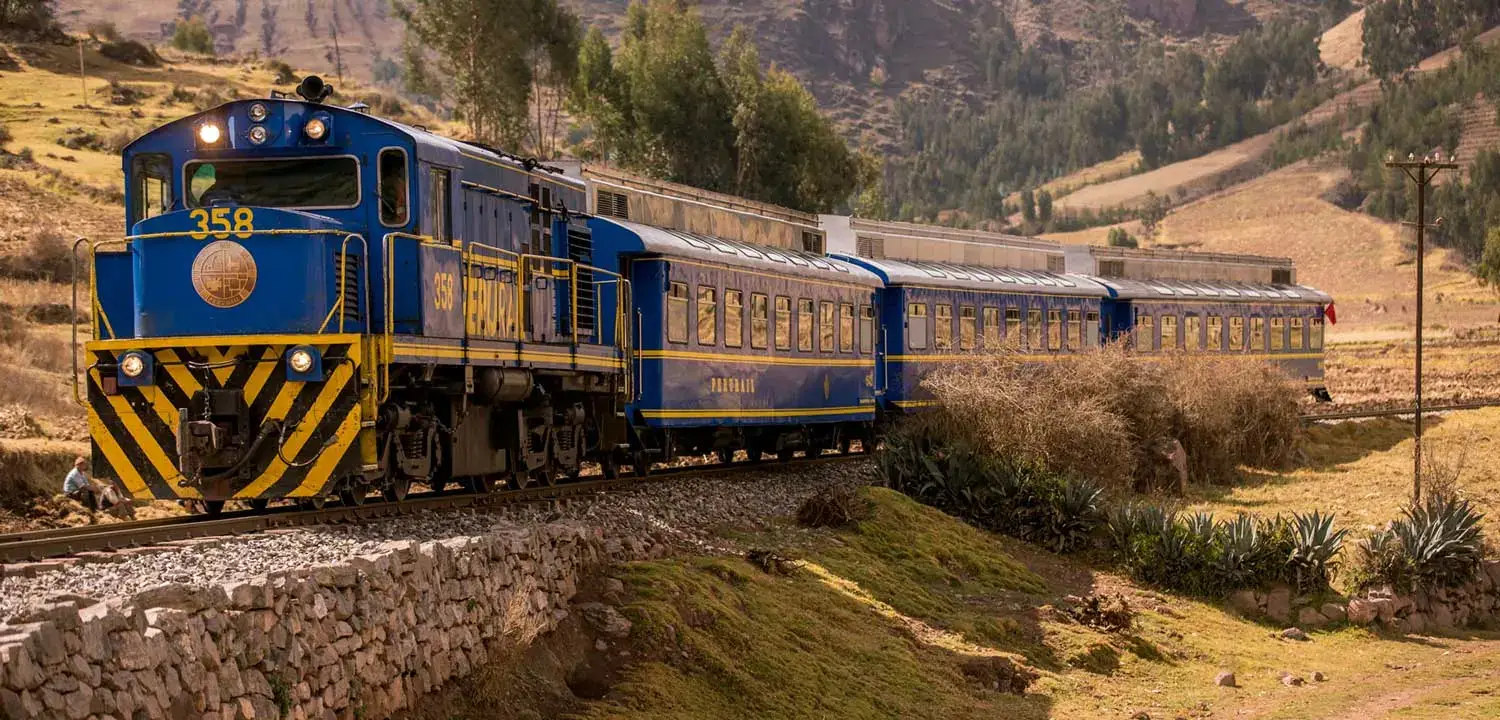
Basically, the railway runs along the Urubamba River from the Sacred Valley to Aguas Calientes. Then, from there, shuttle buses climb to the citadel in about 25 to 30 minutes. So, the train is only one part of your journey, and the timing must match your entry ticket.
Usually, travelers ride the train in the morning, visit the citadel, and return in the afternoon. Alternatively, many people spend a night in Aguas Calientes to enjoy a calmer visit.
2. PeruRail vs Inca Rail
Both Machu Picchu train companies use comfortable cars with large windows. However, their schedules and classes differ, so compare both before you book. For example, PeruRail runs the famous Hiram Bingham luxury train, while Inca Rail offers a car with an open-air viewing area.
In general, the Machu Picchu train experience is similar on the standard classes. Therefore, choose the departure time that best fits your entry hour, rather than the brand.
3. Machu Picchu Train Classes Compared
| Company | Main classes |
|---|---|
| PeruRail | Expedition, Vistadome, Vistadome Observatory, Hiram Bingham |
| Inca Rail | The Voyager, The 360°, First Class, Private |
On every Machu Picchu train, standard classes include a seat, panoramic windows, and a light snack or drink. Meanwhile, premium classes add more space, meals, live music, or observation cars. Finally, the luxury options include fine dining and extra services.
Sit on the left side of the train on the way to Aguas Calientes for more river views. Then, on the way back, the right side usually has the better scenery.
4. Where the Machu Picchu Train Departs
Most Machu Picchu train departures leave from Ollantaytambo, in the Sacred Valley. Typically, the ride takes about one and a half to two hours. As a result, many travelers combine a Sacred Valley day with an evening train.
By contrast, some trains leave from stations near Cusco, which takes longer, often around three and a half hours or more. Our Ollantaytambo guide explains why many visitors start from the valley. If you board at Poroy, a Poroy train station transfer gets you there on time.
Send us your dates and preferred class. Our local team will book the train, bus, and entry so the timing works perfectly.
5. Booking Your Machu Picchu Train Tickets
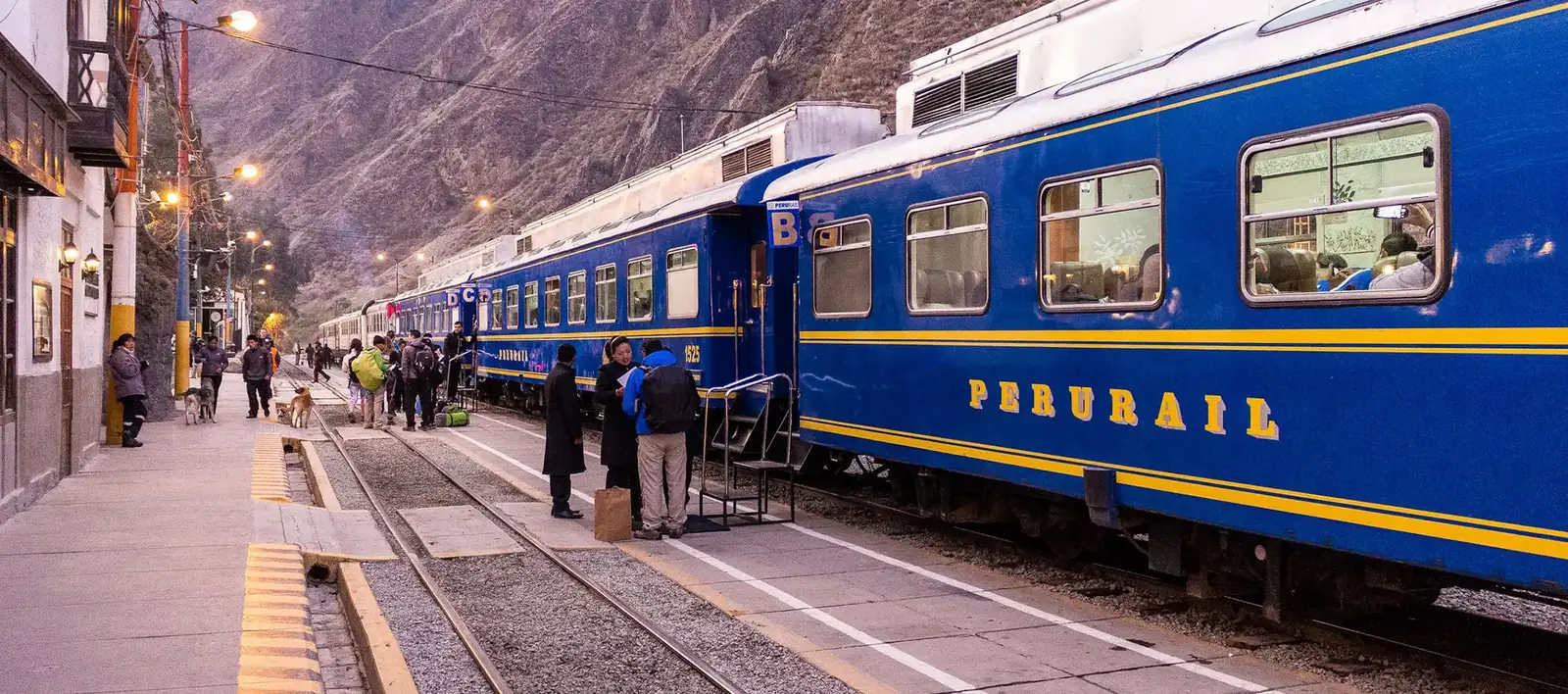
Importantly, book your train only after you have your citadel ticket. First, choose your entry hour. Then, pick a train that arrives at least two hours earlier, including the bus ride up.
For example, you can book on the official websites of PeruRail and Inca Rail. Alternatively, a local operator can book the train, bus, and entry together. Our Machu Picchu tickets guide explains the entry rules.
6. Luggage Rules on Board
- On the Machu Picchu train, bring one small bag or backpack, usually up to about 5 kg per person.
- Also, leave your main suitcase at your hotel in Cusco or Ollantaytambo.
- In addition, keep your passport with you, because staff check it when you board.
- Finally, pack a light jacket, as mornings in the valley can be cool.
Also, check the current rules with your train company before you travel.
7. Tips for Your Machu Picchu Train Ride
First, arrive at the station 30 minutes before your Machu Picchu train leaves. In addition, keep your printed or digital ticket ready with your passport. During the rainy season, delays can happen, so leave extra time in your plan.
Above all, enjoy the views. Indeed, the canyon changes from dry mountain slopes to lush cloud forest in less than two hours.
8. Tours That Include the Train


9. Machu Picchu Train: Frequently Asked Questions
Which Machu Picchu train is best?
For most travelers, a standard panoramic class is comfortable and good value. Choose a luxury class only if the experience itself is a highlight for you.
How long is the ride?
From Ollantaytambo, about 1.5 to 2 hours. From stations near Cusco, it takes considerably longer.
Can I take the train from Cusco city?
Some trains leave from stations near Cusco. However, many travelers prefer to go by road to Ollantaytambo and board there.
How far in advance should I book?
Ideally, book as soon as you have your entry ticket, especially from May to October.
Is there a luggage limit?
Yes, usually a small bag of about 5 kg per person.
Do I need my passport?
Yes. In fact, staff check your passport and ticket when you board.
10. Final Thoughts on the Machu Picchu Train
The Machu Picchu train is easy to use once you match it to your entry hour. So, book the citadel first, then the train, and leave a little extra time for the bus.
Also, keep planning with our guides to Aguas Calientes and Machu Picchu transport, or browse our Machu Picchu tours from Cusco.
Our local Cusco tour operator team can book your train, bus, and entry in one plan. Send us your dates, and we will check availability.
We are a local travel team based in Cusco, Peru (Edificio Machupicchu, Av. El Sol 900). We write these guides to help international travelers plan safe and enjoyable trips.