
Salkantay Trek to Machu Picchu 5 Days
The Salkantay Trek to Machu Picchu is a 5-day journey beneath one of the most sacred snow-capped mountains in Peru. This Salkantay vs Inca Trail comparison matters most for difficulty: Salkantay trek difficulty comes mainly from altitude, not technical climbing. Unlike the Inca Trail, this route requires no special permit. This Salkantay trek itinerary stays flexible even during peak season.
Written by the Travel Free Cusco Team – local, Cusco-based trekking specialists who run this route year-round.
5 Days / 4 Nights
4,650 m / 15,255 ft
Moderate to Hard
Why Choose Our Salkantay Trek to Machu Picchu
Our Salkantay 5 days Cusco departures run with small groups and experienced local guides trained specifically in altitude management. Salkantay trek difficulty is real, but proper acclimatization makes it manageable for most travelers. Because there is no permit system on this route, we can confirm your spot quickly.
No Permit Required
Unlike the Inca Trail, the Salkantay Trek to Machu Picchu has no government permit system, so you can book with flexibility, even a few weeks before your trip. As a result, this makes it an excellent option for travelers finalizing their Peru itinerary on shorter notice.
Small Group Sizes
Groups stay small on purpose, usually between 8 and 12 travelers, led by a bilingual guide trained specifically in altitude management. This size allows guides to check in with each traveler individually throughout the day, especially near the pass.
Full Camping Support
Cooks and horsemen travel ahead each day, setting up camp and preparing fresh meals before hikers arrive at every campsite. Dietary restrictions can usually be accommodated with advance notice, so let us know about any allergies when you book.
Salkantay Trek to Machu Picchu Itinerary
Day 1: Cusco to Soraypampa
An early pickup from your hotel starts this leg of the Salkantay trek itinerary, heading toward Mollepata and then the trailhead. The first hike leads to Soraypampa, with views of Humantay Lake along the way.
Day 2: Salkantay Pass
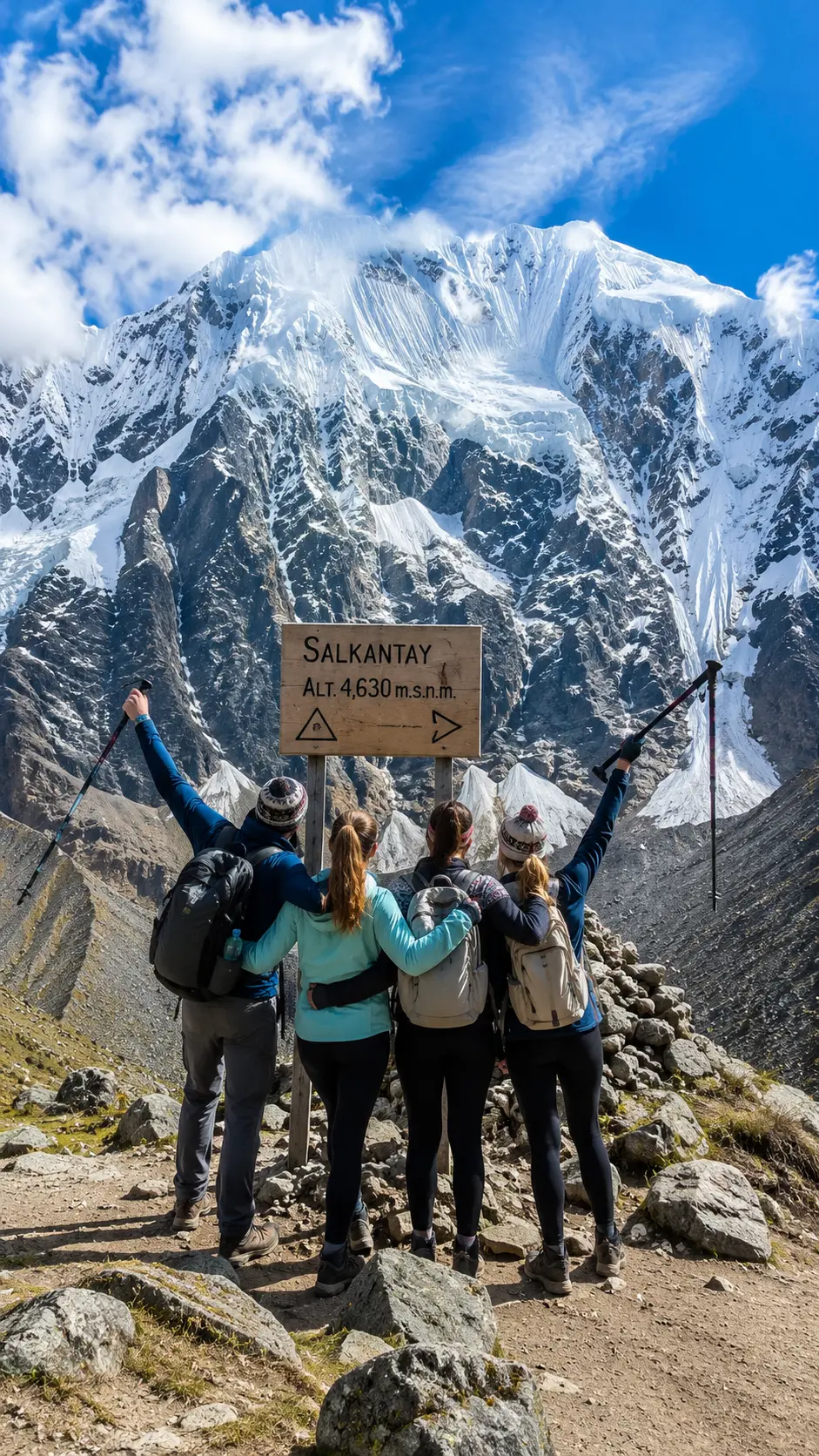
This is the toughest day of the trek, crossing the pass at nearly 4,650 meters. The descent afterward drops quickly into a warmer, greener valley.
Day 3: Cloud Forest Descent
This part of the Salkantay trek itinerary continues descending into cloud forest, with noticeably thicker air and greener surroundings. Coffee and fruit farms appear along the trail.
Day 4: Hydroelectric to Aguas Calientes
This stage of the Salkantay trek itinerary combines walking and transport to reach Aguas Calientes, at the base of Machu Picchu mountain. The night is spent in a hotel.
Day 5: Machu Picchu
An early bus ride up to Machu Picchu completes the trek with a guided tour of the citadel itself, followed by a return train to Cusco.
What\u2019s Included in the Salkantay Trek
The Salkantay Trek to Machu Picchu includes professional guiding, camping equipment, and transport, giving you everything needed for a safe and comfortable 5-day journey.
Cooks travel with every group as well, preparing fresh meals at each campsite rather than relying on pre-packaged food. We check and maintain equipment regularly between departures, so tents and sleeping mats arrive in good condition at every stop.
- Professional bilingual guide
- Camping equipment (tent, sleeping mat, dining tent)
- All meals during the trek
- Entrance ticket to Machu Picchu
- Bus ticket up to the citadel
- Train ticket back to Cusco
What’s Not Included
- Sleeping bag rental (available for a fee)
- Breakfast on day one
- Travel insurance
- Tips for guides and support staff
- Personal expenses in Aguas Calientes
What to Bring for the Salkantay Trek
- Warm sleeping bag liner
- Waterproof jacket
- Sturdy broken-in hiking boots
- Sun protection (hat, sunscreen, sunglasses)
- Headlamp and trekking poles
- Reusable water bottle
Frequently Asked Questions About the Salkantay Trek Itinerary
How hard is the Salkantay Trek to Machu Picchu?
Salkantay trek difficulty is moderate to high, mostly because of altitude on day two. The trail itself is not technical, and porters carry the heavier camping gear, so hikers only manage a daypack throughout the trek. Daily walking distances run longer than the Inca Trail, often 15 to 22 kilometers on the toughest days, which adds to the physical demand.
Do I need a permit for the Salkantay Trek?
No. Unlike the Inca Trail, this route has no government permit system, which makes it easier to book on shorter notice, sometimes just weeks or even days before your trip. This flexibility is one of the main reasons travelers choose Salkantay over the classic route.
How many days is the Salkantay Trek to Machu Picchu?
It runs 5 days and 4 nights as part of the full Salkantay trek itinerary, ending with a full day at Machu Picchu. Some travelers extend the trip with an extra night in the Sacred Valley beforehand.
Can beginners do the Salkantay Trek?
Yes, with proper acclimatization beforehand in Cusco. Salkantay trek difficulty comes from altitude, not technical skill, so a reasonable level of fitness is enough. In fact, many first-time trekkers with no major hiking background complete this trek successfully with the right preparation.
What is the highest point on the Salkantay Trek?
At nearly 4,650 meters, the Salkantay Pass is the highest point and the most physically demanding section of the entire trek. Afterward, the descent drops quickly into a warmer, greener valley, offering welcome relief.
How does weather affect Salkantay trek difficulty?
Overall, weather shifts quickly at altitude. Even during the dry season, snow and hail are possible near the pass, while lower sections of the trek stay warm and humid. Layering properly, especially on day two, matters more than on any other day of the trek.
Can I do the Salkantay Trek without a guide?
We do not recommend it. The trail has limited markings in sections, and the altitude and remote location make a knowledgeable local guide important for safety, even though the route itself is not technical.
Book Your Salkantay Trek to Machu Picchu Today
Reserve your Salkantay 5 days Cusco spot today, whatever your Salkantay trek difficulty concerns may be. Our team can help you plan the right Salkantay 5 days Cusco trip and confirm availability for your travel dates.
Still deciding between routes? See our Salkantay vs Inca Trail comparison. You can also reach out directly as the best tour operator in Cusco for this trek.
Trek Difficulty and Altitude
This route reaches a higher maximum altitude than the classic Inca Trail, at nearly 4,650 meters on day two. Because of this, we strongly recommend at least two full days of acclimatization in Cusco. Our guide on altitude sickness in Cusco covers exactly how to prepare.
The area around Salkantay includes protected Andean ecosystems. For official information, see the Servicio Nacional de Areas Naturales Protegidas (SERNANP).
Salkantay Trek to Machu Picchu vs Inca Trail
Many travelers compare the Salkantay Trek to Machu Picchu with the classic Inca Trail before booking. The Inca Trail follows original Inca stonework and ends with a dramatic walk through the Sun Gate. However, the government limits permits, which sell out months in advance.
Salkantay covers more ecological zones, from high glaciers to cloud forest, and never requires a permit. Our detailed Salkantay vs Inca Trail comparison breaks down cost, difficulty, and scenery side by side.
How to Prepare for the Salkantay Trek
Altitude acclimatization matters more than raw fitness. We recommend at least two full days in Cusco before starting, ideally including a shorter warm-up hike to test how your body handles the elevation.
Regular cardiovascular exercise in the months before your trip also helps, especially stair climbing or hiking with a loaded pack. Hydration throughout the trek reduces altitude-related symptoms significantly, and coca tea at camp is a traditional remedy many travelers find helpful. Our guide to the best time to visit Peru can help you plan your acclimatization days around the season.
Who Should Do the Salkantay Trek to Machu Picchu?
This trek suits travelers who want a genuine wilderness experience and are comfortable with several nights of camping. It works well for reasonably fit adults, couples, and small groups of friends.
Families with older teenagers sometimes join as well, though the altitude and distance make it less suitable for young children. Solo travelers join regularly too, since group departures naturally create a social atmosphere among trekkers over the five days.
Health and Safety on the Salkantay Trek to Machu Picchu
Altitude sickness is the main health concern on this route, particularly on day two approaching the pass. Guides on our team watch for early symptoms throughout the climb, and descending remains an option if a traveler struggles.
We recommend consulting a doctor before the trip if you have pre-existing heart or lung conditions, given the extreme altitude involved. Horses are available on the toughest section for exactly this reason.
Best Time for the Salkantay Trek to Machu Picchu
From May to September, the dry season offers the clearest skies and firmest trails, along with the coldest nighttime temperatures at high camps.
The rainy season, from November to March, brings a real chance of rain, but also thinner crowds and greener scenery throughout the trek. Unlike the Inca Trail, this route never closes for annual maintenance, so it remains a solid option even in February.
Shoulder months like April and October often provide a good balance of drier trails and fewer crowds. For the official forecast, check SENAMHI, Peru’s national weather service.
Whether you are planning a Salkantay 5 days Cusco trip or still weighing Salkantay vs Inca Trail, our team can help. Contact us directly for current group rates, availability, and any questions about preparing for the altitude and terrain along this route.
Salkantay Trek Prices & Availability
A Salkantay 5 days Cusco group departure is priced per person, and private departures cost more for a flexible schedule. Because there is no government permit fee, a Salkantay 5 days Cusco trip tends to cost less than comparable Inca Trail packages.
Prices generally rise slightly during July and August, when demand across the whole Cusco region increases for every trek. A Salkantay 5 days Cusco booking typically requires a deposit to confirm your spot, with the remaining balance due closer to your travel dates.
What to Expect on the Trail Each Day
Mornings on the Salkantay Trek to Machu Picchu start early, usually with a hot breakfast at camp before the group sets off. However, walking pace is set to match the slowest member of the group, so nobody feels rushed or left behind.
Lunch is typically served at a scenic midpoint along the trail, giving hikers a chance to rest before the final stretch. Meanwhile, guides point out notable landmarks, plants, and wildlife along the way, adding context that most independent travelers would otherwise miss entirely.
Wildlife and Scenery Along the Route
The Salkantay Trek to Machu Picchu passes through five distinct ecological zones, each with its own character. Condors are occasionally spotted soaring above the high pass, while llamas and alpacas graze in the alpine sections near Soraypampa. As a result, wildlife photography often becomes an unexpected highlight for many travelers.
As the trail descends into cloud forest, the scenery shifts dramatically, since the ecosystem changes completely within just a few hours of walking. Orchids, hummingbirds, and dense green vegetation replace the barren rock of the higher elevations, giving the trek a genuine sense of ecological variety that few other routes in the region can match.
What Makes This Trek Different
Unlike a single-day tour, the Salkantay Trek to Machu Picchu is a genuine multi-day wilderness experience. Travelers sleep in tents for three nights, and our cooks prepare fresh meals at camp each day.
The sense of remoteness builds gradually as the trail moves further from any road access. For many travelers, this is exactly what draws them to Salkantay over a shorter day trip: the trek itself becomes part of the Machu Picchu experience, not just a means of transport there. Watching the landscape transform each day, from glacier to cloud forest to jungle, gives the whole trip a sense of progression that a single-day visit cannot replicate.
Salkantay Trek Group Size and Guides
Group sizes on our Salkantay Trek to Machu Picchu departures stay small on purpose, since smaller groups move more comfortably at altitude. Specifically, guides on this route hold wilderness first aid certification, and they carry oxygen and basic medical supplies for the entire trek.
Support staff, including cooks and horsemen, travel ahead of the group each day to set up camp and prepare meals, so hikers arrive at each campsite to find tents and food already underway. This level of support is standard on every Salkantay 5 days Cusco departure we run.